Levoit Core 200S UK Review (2026): The Best Under £100?
Updated: October 2026 · 200S vs 300S compared · Prices checked 18 Oct 2026
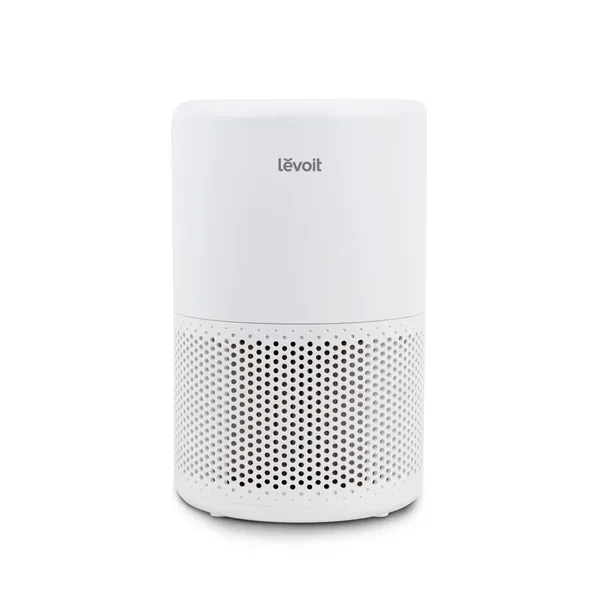
200S vs 300S: Feature Delta at a Glance
The table below is the core of this review. Every feature difference between the 200S and 300S, priced against the £15 gap at purchase and the £51.45 gap over three years.
| Feature | Core 200S | Core 300S | Note |
|---|---|---|---|
| Price | £69.99 | £84.99 | +£15 to upgrade |
| CADR — dust (m³/h) | 166 | 246 | +80 m³/h; conv. AHAM 98 × 1.699 vs 145 × 1.699 |
| Covers (3 ACH) | 8 m² | 12 m² | +4 m² |
| Air quality sensor + auto mode | No | Yes | 300S only |
| Sleep noise | 24 dB | 24 dB | Same |
| Filter price (6-month) | £14.99 | £19.99 | +£5/filter |
| Filter cost/yr | £29.98 | £39.98 | +£10/yr |
| 3-year total | £179.25 | £230.70 | +£51.45 |
Electricity at Ofgem Q1 2026 rate: 24.5p/kWh. Filter cost based on Levoit UK replacement filter prices (6-month interval). 3-year total = unit price + (annual running cost × 3).
What You Give Up: Room Coverage and the Missing Sensor
The two meaningful things the 200S lacks relative to the 300S are room coverage and the air quality sensor. They are not equal in importance.
Room coverage: At 3 ACH, the 200S covers 8 m² and the 300S covers 12 m². A UK single bedroom (box room) is typically 7–9 m². A UK double bedroom is typically 11–14 m². If your room is a box room, the 200S is correctly sized. If your room is a standard double bedroom, the 200S is undersized and the 300S is the minimum. Use the room coverage calculator to check your exact room dimensions.
The air quality sensor: The 300S has an onboard particulate sensor and auto mode. When particles spike — from cooking, vacuuming, a pet walking past, or someone opening a window near a road — the 300S detects this and increases fan speed automatically. The 200S does not have this sensor. You can still control fan speed manually or via the VeSync app schedule, but there is no automatic response to particle spikes.
The absence of the sensor matters more than the CADR gap if you live in a home with variable pollution events (cooking fumes, pets, busy road outside). It matters less if your use case is bedroom sleep mode, set to a fixed low speed overnight.
What You Keep: Sleep Noise, Wi-Fi App, and Filter Ecosystem
Three things the 200S does as well as the 300S:
Sleep noise: Both models measure 24 dB on their lowest fan speed. In a quiet bedroom, 24 dB is below the threshold of perception for most adults — it produces a faint white noise that many people find preferable to silence. The 200S is not a compromise on sleep-mode noise. This is the feature that most bedroom buyers care about most, and the 200S delivers it identically.
Wi-Fi and VeSync app: The 200S is a 200S (Smart), not the non-smart 200. It connects to 2.4 GHz Wi-Fi via the VeSync app. You can set schedules, check filter life, and control fan speed remotely. The core difference vs the 300S is that the 300S also reads air quality in the app — the sensor data is displayed there and used for auto mode. The 200S shows Wi-Fi connectivity but no particle readings because there is no sensor to read.
Filter ecosystem: The 200S filter is cheaper at £14.99 per 6 months (£29.98/yr) vs £19.99 for the 300S filter (£39.98/yr). This is a real £10/year saving. Levoit filters for both models are available from Levoit UK direct and Amazon UK. The H13-grade claim on the 200S filter is manufacturer-stated, not EN 1822 independently certified — the same caveat applies to the 300S.
UK Specs at a Glance
CADR — Dust
166 m³/h
Converted from AHAM CFM 98 × 1.699
CADR — Pollen
165 m³/h
Converted from AHAM CFM 97 × 1.699
CADR — Smoke
161 m³/h
Converted from AHAM CFM 95 × 1.699
Room Coverage
8 m² at 3 ACH
Correct for UK box room / single bedroom
Noise
24 dB sleep / 48 dB max
Power
6W typical
£6.44/yr at 12h/day, 24.5p/kWh
Filter
£14.99 / 6 months
H13-grade claimed (not EN 1822 certified)
Certifications
None currently
H13 is manufacturer-claimed only
UK Price
£69.99
Checked 18 Oct 2026
When the Core 200S Wins
The 200S is the correct choice in two specific situations:
Situation 1 — Room at or under 8 m², budget is a hard constraint. If your room is a box room or small single bedroom, the 200S is correctly sized. Buying the 300S would give you surplus CADR and cost you £51.45 more over three years for capability you cannot use. The savings are real.
Situation 2 — Bedroom sleep use only, manual speed control is acceptable. If you plan to run the purifier at a fixed low speed overnight and you do not need the unit to respond to daytime pollution events, the absence of the sensor does not affect your use case. Set it to sleep mode at bedtime, leave it running, check the filter every 6 months. The 200S handles this as well as the 300S.
The decision rule:
- Room 8 m² or under + budget is fixed: buy the Core 200S (£179.25 over 3 years). The 300S costs £51.45 more and covers room you do not have.
- Room 8–12 m²: buy the Core 300S. The 200S is undersized for this range. The sensor becomes valuable as a secondary reason.
- Sensor matters to you (cooking, pets, variable use): buy the Core 300S even if your room is 8 m². The £15 purchase premium pays back in the first incident where the auto mode catches a spike you would have missed.
- 3-year savings of £51.45 from choosing the 200S are real but they do not offset the missing sensor if you need it. This is the honest framing: the money you save is meaningful, but the feature you lose is also meaningful.
Verdict: The Honest Budget Compromise
The Core 200S is not a bad air purifier. At 24 dB sleep noise, Wi-Fi app control, and a 3-year total cost of £179.25, it is a competent, quietly-running bedroom purifier for small rooms. The compromises are specific and real: no air quality sensor, no auto mode, room coverage limited to 8 m² at 3 ACH.
If those compromises fit your room and use case, the 200S saves you £51.45 over three years vs the 300S. If they do not, pay the extra £15 now and buy the Core 300S. The £15 purchase delta is the smallest number in this decision; the three-year trajectory and the sensor gap are the ones that matter.